ABA and Sensory Integration: When Behaviors Are Signals of Sensory Needs
When a child covers their ears in a noisy room, chews on their shirt, or avoids messy play, it can be easy to think they’re being difficult or oppositional. But for many children, these aren’t signs of misbehavior, they’re signals of sensory needs.
Behind every action is communication. By combining Applied Behavior Analysis (ABA) with sensory integration strategies, we can better understand what a child’s behavior is trying to tell us and support them in ways that help them thrive.
Understanding Sensory Processing
Sensory processing refers to how our nervous system receives, interprets, and responds to information from the world around us. We process input from eight sensory systems, not just the traditional five.
- Sight
- Hearing
- Touch
- Smell
- Taste
- Movement
- Body Awareness
- Internal Senses
When the brain processes sensory information efficiently, we can stay calm, focused, and regulated. But when it struggles to do so, when sensory input is too strong, too weak, or confusing, a child may react in ways that look like “challenging behavior.”
For example:
- A child who screams when touched might be hypersensitive to touch.
- A child who constantly moves or is bumping into things might need body awareness regulation.
- A child who ignores their name being called might be tuning out overwhelming hearing input.
These reactions aren’t intentional misbehavior, they are adaptive responses to overwhelming or underwhelming sensations.
The ABA Perspective: Behavior as a Window
Applied Behavior Analysis relies on understanding the function of behavior, the “why” behind what we see. When we observe through the lens of ABC (Antecedent, Behavior, Consequence), we can start to uncover what is maintaining it.
However, not all behaviors are socially motivated. Some are automatically reinforced, meaning they provide internal sensory feedback that feels calming, stimulating, or organizing.
Example:
- A child who flaps their hands may be self-regulating.
- A child who hums loudly might be blocking out unpredictable background noise.
- A child who rocks may be seeking rhythmic vestibular input to soothe anxiety.
By identifying the sensory function of these behaviors, ABA professionals can help children meet their needs in more adaptive, functional ways, without taking away their comfort or coping tools.
Sensory Integration: Supporting Regulation and Comfort
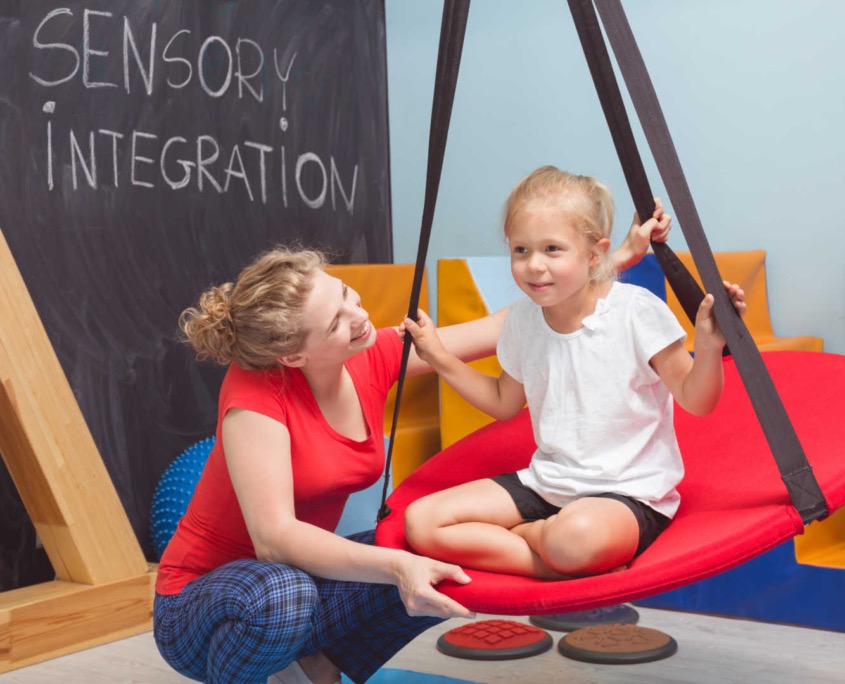
Sensory integration, often guided by occupational therapists, focuses on helping the brain process sensory input more effectively. The goal is to create a “balanced sensory diet”, a personalized plan of activities that help the child achieve and maintain regulation. When integrated with ABA, these strategies can make behavior interventions more compassionate and sustainable.
Bringing ABA and Sensory Integration Together
ABA and sensory integration are most powerful when they’re used together, not separate.
- Assessment and Collaboration
The process begins with understanding both behavioral patterns and sensory needs. An ABA therapist might collect data on when a behavior occurs, while an OT identifies which sensory systems may be involved. Together, they create a comprehensive support plan that addresses both behavior and regulation.
- Environmental Adjustments
Sometimes the simplest change, such as reducing background noise, adjusting lighting, or offering a sensory friendly workspace, can significantly decrease challenging behaviors.
- Teaching Replacement Skills
Children can learn to communicate their sensory needs in appropriate ways:
- Asking for “break time”
- Using visuals to request sensory input
- Learning calming strategies like deep breathing or squeezing a stress ball
- Reinforcing Self-Regulation
When children learn how to meet their sensory needs safely and appropriately, those behaviors can be positively reinforced. Over time, self-regulation becomes an empowering skill rather than a constant struggle.
Why This Matters for Families and Caregivers
When parents understand that sensory needs can drive behavior, frustration often turns into empathy. Instead of focusing on stopping a behavior, shift to asking what is my child trying to tell me? This perspective helps caregivers respond with strategies that both respect the child’s sensory experience and promote growth and independence.
At Ujala Life
At Ujala Life, our team believes that behavior is communication, and that understanding sensory needs is key to unlocking each child’s potential. Our ABA professionals work closely with families and collaborating therapists to ensure that every program addresses not just learning goals, but also the sensory comfort and emotional well-being of each child.
Through this holistic approach, we help children build meaningful skills, strengthen regulation, and experience success in everyday life.
Conclusion
When we combine the science of ABA with the understanding of sensory integration, we create more compassionate, effective, and individualized support. Behaviors become messages we can interpret, not problems we must eliminate.
By recognizing sensory needs as part of the behavioral picture, we open the door to deeper understanding, stranger connections,and brighter daily wins for every child.