Building Bridges: How ABA Strengthens Effective Communication in Children with Autism
At Ujala Life, we believe that communication is more than just words, it’s the bridge between a child and the world around them. For children with autism, expressing thoughts, feelings, and needs can be hard to master. However, it is one of the most important skills to be developed. Applied Behavior Analysis (ABA) helps build that bridge, guiding children step by step towards confidence, connection, and independence.
Understanding Communication Challenges in Autism
Each child with autism has their own level and style of communication. Some may be nonverbal, while others have speech but can still struggle at times. Many children experience challenges with:
- Expressive Language: sharing wants, needs, and ideas
- Receptive language: understanding what others are saying
- Social communication: picking up on tone, body language, or conversation cues
These difficulties can sometimes lead to frustration or behaviors that are misunderstood. ABA helps by meeting children where they are, focusing on building meaningful ways to communicate, whether through speech, sign language, gestures, or assistive technology.
How ABA Approaches Communication
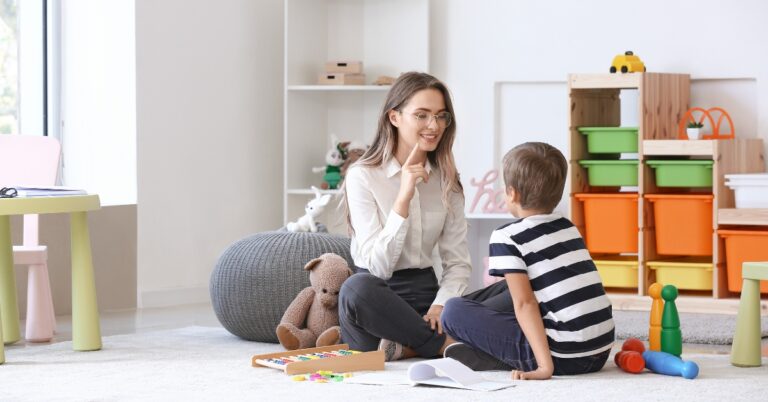
ABA is an evidence based approach that uses structured teaching, positive reinforcement, and data driven strategies to help children learn new skills. When it comes to communication, ABA programs are highly individualized. No two children are the same, so no two plans look alike.
The goal isn’t to just teach words, it’s to teach functional communication that allows a child to express themselves in a way that works for them.
Strategies ABA Uses to Build Communication Skills
Here are some of the most common ways ABA therapy strengthens communication:
- Functional Communication Training (FCT): Children learn to ask for what they need, whether that’s a snack, a break, or a favorite toy, in ways that reduce frustration and challenging behaviors.
- Natural Environment Teaching (NET): Communication is practiced during play, daily routines, and real world moments so children can use their skills outside the therapy room.
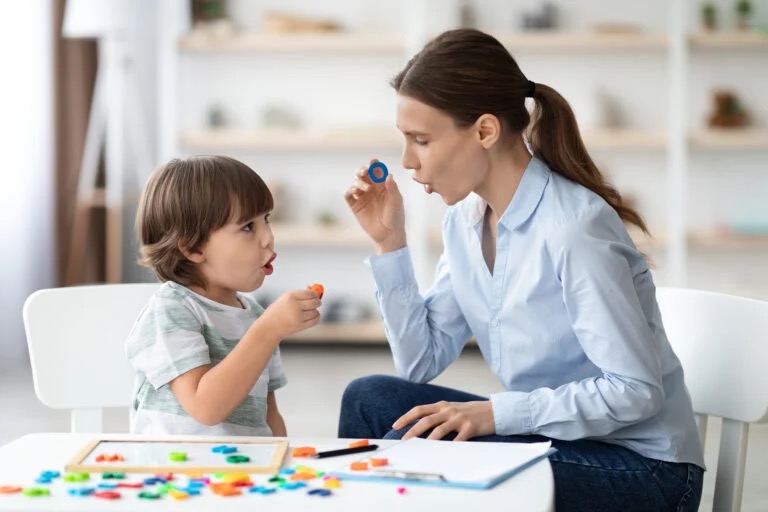
- Prompting and Prompt Fading: Therapists provide support (like modeling or gestures) when needed, then gradually fade that support so the child can communicate independently.
- Positive Reinforcement:Every communication attempt, even small ones, is celebrated to motivate children to keep trying.
- Augmentative and Alternative Communication (AAC): For children who benefit from it, tools like PECS (Picture Exchange Communication System) or speech-generating devices can be introduced to give them a voice.
Benefits Beyond Words
When communication improves, so do many other areas of life. Families often see:
- Fewer meltdowns because the child can better express their needs
- More social connections with siblings, peers, and caregivers
- Greater confidence and independence in daily routines
- Stronger relationships built on understanding and connection
The Role of Parents and Caregivers
Parents are essential in building children’ s communication skills. ABA therapy is most effective when skills are practiced consistently at home and away from the clinic. Your child’s therapy team will guide you with strategies, model techniques, and offer support so that communication can grow in every environment, not just during sessions.
A Hopeful Path Forward
Every child’s journey with their communication will be unique and come with its own challenges. Each step taken forward is a powerful milestone worth celebrating. This could be using a word, sign, gesture, or even a device.
At Ujala Life, we’re committed to helping children build bridges to connection, confidence, and a brighter future through ABA therapy.