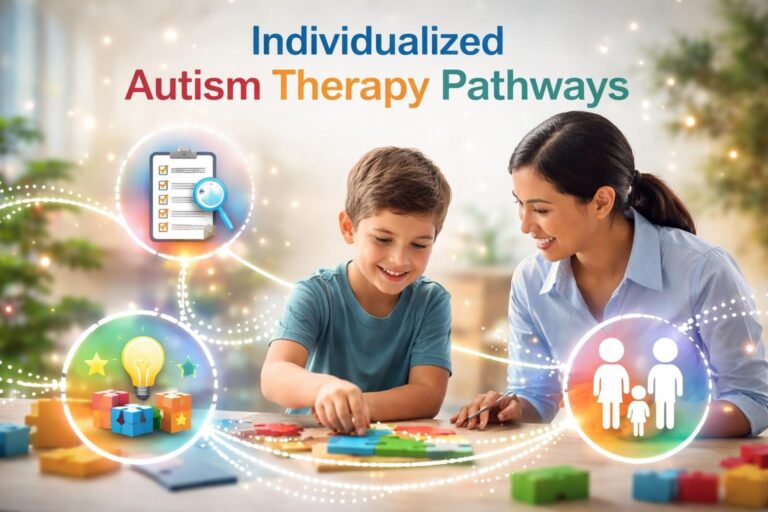

Ages 6-8 Matter: The Advantage of Extending Support Beyond Early Childhood
Early intervention is often emphasized in autism and ABA services, and for good reason. The early years are a powerful time for learning, brain development, and building foundational skills. But development does not stop at age five.
At Ujala Life, we are currently exploring the possibility of extending services to children ages 6-8. While no decision has been made yet, we believe it is important to thoughtfully consider how continued, developmentally appropriate support could benefit children as they enter elementary school and navigate new expectations.
Extending support to children ages 6-8 may offer continued, developmentally appropriate support during one of the most critical transition periods of childhood.
Why the Ages of 6-8 Are a Critical Window
Between the ages of six and eight, children experience significant changes across multiple areas of development:
- Increased academic expectations
- Greater social complexity with peers
- Reduced adult support compared to early childhood settings
- More emphasis on independence, emotional regulation, and flexibility
For children with developmental differences, this period can feel overwhelming without consistent support. Skills learned in early intervention may not always generalize automatically to classroom settings, peer relationships, or less structured environments.
Extending care during this stage allows children to practice, strengthen, and apply skills in ways that align with their real-world demands.
Benefits of Extending ABA-Informed Support
- Supporting School Readiness and Success
As children move into elementary school, they are expected to follow group instructions, manage transitions, complete tasks independently, and navigate classroom routines. Continued services can help reinforce skills such as attention, task completion, communication, and adaptive behavior in school-relevant contexts.
- Strengthening Social and Emotional Skills
Peer interactions become more nuanced during the early school years. Children may need extra support with:
- Perspective-taking
- Emotional regulation
- Conflict resolution
- Flexible thinking
Extended services allow for intentional teaching and practice of these skills in ways that feel natural and supportive rather than corrective.
- Promoting Independence and Confidence
Rather than focusing only on early developmental milestones, services for ages 6-8 can shift toward independence. This may include self-advocacy, daily living skills, problem-solving, and building confidence in navigating new situations.
The goal is not dependence on services, but empowerment.
- Providing Continuity During Transitions
Transitions, such as moving from preschool to kindergarten or from structured therapy to school-based services, can be challenging. Extending care creates a bridge rather than a sudden stop, offering children and families consistency during periods of change.
Why This May Be a Good Option for Families
Every child’s developmental path is unique. Some children continue to benefit from structures beyond early childhood, especially when:
- Skills are emerging but not yet consistent
- Generalization across settings remains difficult
- Social or emotional challenges increase with age
- Families want additional guidance navigating school expectations
Extending services to ages 6-8 provides families with options, not pressure. It acknowledges that growth does not follow a rigid timeline and that support should meet children where they are.
A Family-Centered, Individualized Approach
At Ujala Life, any extension of services to ages 6-8 would remain grounded in our core values:
- Individualized, child-led goals
- Collaboration with families and schools
- Respect for neurodiversity
- Focus on quality of life, not just outcomes
Services for older children would look different from early intervention. Goals would be developmentally appropriate, functional, and meaningful to the child’s daily life, not a continuation of “early childhood” programming, but an evolution of care.
Looking Ahead
Extending support to ages 6-8 reflects a broader understanding of development: that children grow at different rates, face new challenges at different stages, and deserve support that adapts with them.
As Ujala Life continues to grow, we remain committed to listening to families, observing children’s needs, and thoughtfully exploring ways to support meaningful progress, at every stage of development.
Because support should not end simply because a child has a birthday. It should continue as long as it helps them thrive.