
Applied Behavior Analysis at Home Guide: Your 2026 Roadmap
Unlock the life-changing potential of applied behavior analysis at home and set your child on a path to greater independence in 2026. If you are a parent or caregiver seeking practical, effective strategies for children with Autism Spectrum Disorder or behavioral challenges, this guide is designed just for you.
Inside, you will discover the foundations of ABA, step-by-step home strategies, proven techniques, and ways to track progress. Get ready to build confidence, celebrate small wins, and find expert resources to support your family’s unique journey. Let’s begin your roadmap to success together.
Understanding Applied Behavior Analysis (ABA)
Applied behavior analysis at home is an evidence-based approach focused on helping children develop meaningful skills and behaviors. At its core, ABA is about understanding how actions are influenced by the environment and using this knowledge to encourage positive change. Developed in the 1960s, ABA has become a leading therapy for children with autism and related challenges, evolving with research and family needs.
ABA’s foundation is built on several key principles. First, positive reinforcement encourages desired behaviors by providing rewards. Second, the antecedent-behavior-consequence (ABC) model helps families analyze what happens before, during, and after a behavior. Third, data-driven decisions ensure progress is measured and strategies are adjusted for each child. These principles make applied behavior analysis at home both flexible and effective for real-life situations.
Families see many benefits when using applied behavior analysis at home. Children often improve communication, social skills, and independence while reducing challenging behaviors. Home-based ABA offers unique advantages, including comfort, familiar routines, and natural learning opportunities. In the table below, compare home and clinical ABA settings:
| Feature | Home ABA | Clinical ABA |
|---|---|---|
| Environment | Familiar, comfortable | Structured, controlled |
| Flexibility | High | Moderate |
| Parent Involvement | Essential | Variable |
| Generalization | Immediate, real-life | Needs deliberate planning |
Research highlights the impact of early intervention. According to the CDC (2023), over 80% of children who receive early ABA show significant developmental gains. Despite this, myths persist, such as ABA being too rigid or only suitable in clinics. In reality, applied behavior analysis at home adapts to each family’s needs and routines, making it a powerful tool for growth.
Real-life stories show the difference ABA can make at home. For example, a child who struggled with transitions learned to use a visual schedule, reducing meltdowns and increasing independence. Parents who learn and apply ABA strategies become active partners in their child’s progress. Studies, like the Family-Centric Applied Behavior Analysis Outcomes, reveal that empowering parents to deliver ABA at home leads to improved access and outcomes, offering hope and practical solutions for families.
Preparing for ABA at Home: Foundations for Success
Taking the first steps with applied behavior analysis at home can feel overwhelming, but laying a strong foundation will set your child up for meaningful progress. With the right preparation, you can confidently guide your child’s learning and growth in a supportive environment.
Assessing Your Child’s Needs and Readiness
Before starting applied behavior analysis at home, take time to understand your child's unique strengths and challenges. Begin by observing behaviors in different situations and noting patterns. You can use checklists or simple observation logs to record what you see.
Seek input from teachers, therapists, and family members who know your child well. Identify target behaviors you’d like to address, such as communication skills or reducing tantrums. Consider your child’s sensory needs too, as these often influence behavior.
If possible, consult a professional for an initial assessment, but many families start independently. The key is to gather a clear picture of where your child is now. This foundation will help you set realistic goals and track progress over time with applied behavior analysis at home.
Creating an ABA-Friendly Home Environment
A successful applied behavior analysis at home program thrives in a well-structured environment. Choose a quiet, comfortable space where your child can focus on learning and play. Minimize distractions by organizing toys, removing clutter, and ensuring safety.
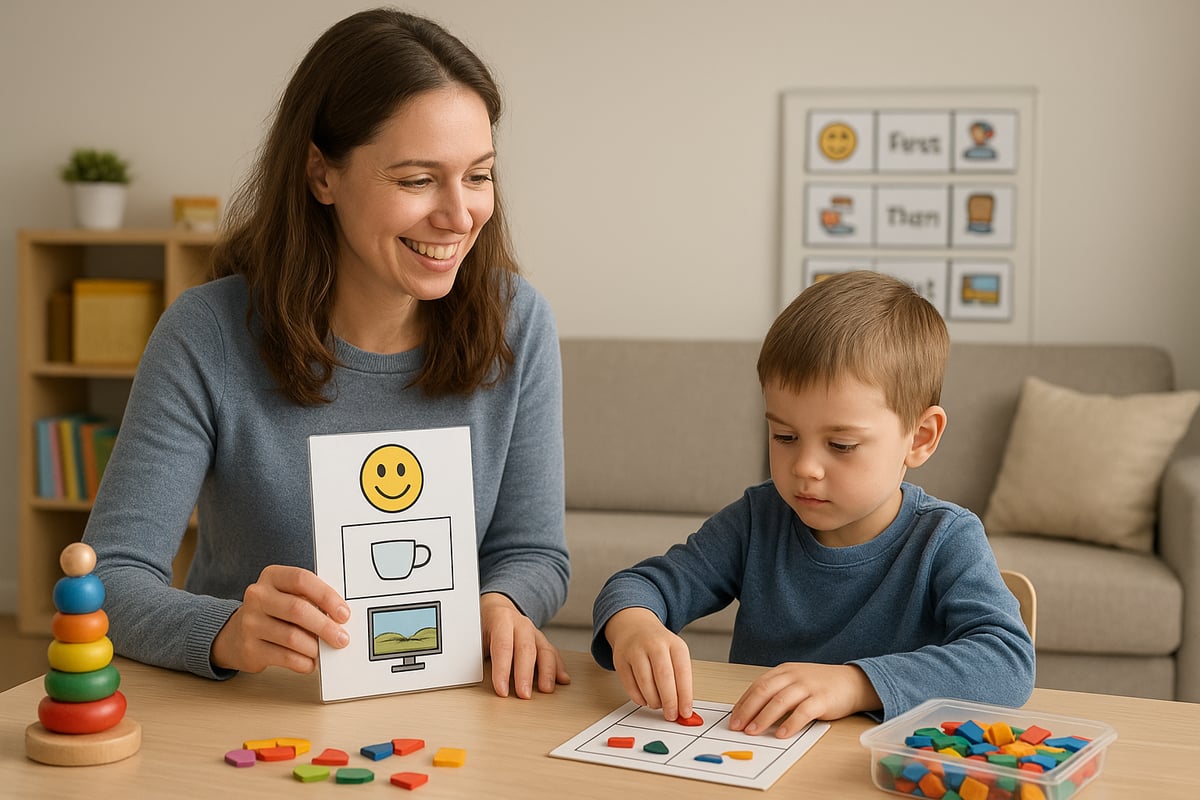
Visual supports, such as schedules and choice boards, can make routines predictable and reduce anxiety. Try setting up a dedicated “learning corner” with clearly labeled bins for materials and calming sensory items nearby.
Establish daily routines, like a morning chart or a set time for ABA activities. This consistency helps your child feel secure and ready to engage. Remember, a thoughtfully arranged space makes applied behavior analysis at home more effective and enjoyable for everyone.
Building Your Support Team
You don’t have to do applied behavior analysis at home alone. Building a strong support team makes a big difference. Parents, siblings, and extended family can all play important roles in daily routines and reinforcement.
When available, collaborate with Board Certified Behavior Analysts (BCBAs), Registered Behavior Technicians (RBTs), or therapists. Their expertise can guide your approach and offer practical solutions. Consistent communication among team members helps everyone stay on the same page.
Consider holding weekly family meetings to review progress, share observations, and celebrate successes. This teamwork ensures your child receives consistent support and encouragement with applied behavior analysis at home.
Setting Realistic Goals and Expectations
Setting achievable goals is essential for success with applied behavior analysis at home. Use the SMART framework: Specific, Measurable, Achievable, Relevant, and Time-bound. Focus on small, manageable steps rather than big leaps.
Balance ambition with patience, as progress can be gradual. Celebrate every win, no matter how small. Tracking milestones in a progress journal helps you see growth over time and keeps motivation high.
When goals are realistic and clearly defined, your child is more likely to experience success. This positive momentum builds confidence and keeps your applied behavior analysis at home journey on track.
Parent Training and Professional Guidance: When to Seek Help
Even with the best intentions, some parts of applied behavior analysis at home benefit from expert guidance. Professional support and parent training boost the effectiveness of your home program.
Look for reputable ABA providers or consultants who offer center-based and parent-focused services. In New Jersey, Ujala Life provides comprehensive ABA support and resources for families. Integrating professional expertise with your daily routines can make a significant difference.
Research shows that parent training increases the impact of applied behavior analysis at home by 30 percent, leading to better outcomes for children. Don’t hesitate to seek help when needed—the right support empowers you and your child to thrive.
Step-by-Step Guide: Implementing ABA Strategies at Home
Unlocking the potential of applied behavior analysis at home is a journey filled with hope, progress, and growth. This step-by-step guide empowers you to confidently implement ABA strategies, creating a nurturing space for your child to thrive. Let’s break down each stage so you feel supported every step of the way.
Step 1: Identify Target Behaviors
Start your applied behavior analysis at home journey by pinpointing which behaviors you’d like to increase or decrease. Observe your child’s daily routines and note moments that present challenges or opportunities for growth. Use the ABC model: What happens before (Antecedent), during (Behavior), and after (Consequence) the behavior?
For example, if your child often has tantrums during transitions, this could be a target behavior. Write down your observations and involve other caregivers for a fuller picture. Clear identification helps you focus your efforts and measure progress.
Step 2: Collect Baseline Data
Before making changes, gather baseline data to understand how often the target behavior occurs. This step is essential for effective applied behavior analysis at home. Use behavior logs, tally sheets, or digital apps to track frequency, duration, or intensity over a set period, such as one week.
For instance, count how many times your child asks for help versus acting out. Baseline data gives you a starting point and helps you celebrate even the smallest improvements as you move forward.
Step 3: Choose and Apply Reinforcement Strategies
Reinforcement is at the heart of applied behavior analysis at home. Choose rewards that truly motivate your child, such as praise, tokens, or favorite activities. Positive reinforcement encourages desired behaviors, while negative reinforcement involves removing something unpleasant when the right behavior occurs.
Consider using sticker charts or token systems, and always deliver reinforcement immediately. For more practical tips, explore ABA strategies and best practices to maximize your sessions’ effectiveness and keep your child engaged.
Step 4: Teach Replacement Skills
Challenging behaviors often signal unmet needs. In applied behavior analysis at home, teaching replacement skills gives your child more appropriate ways to communicate. Identify what your child is trying to achieve with the behavior, then model and prompt a better alternative.
For example, instead of screaming to avoid a task, teach your child to say, “Can I have a break?” Practice together and celebrate attempts, no matter how small. Consistency and patience will help these new skills stick.
Step 5: Implement Consistent Routines and Visual Supports
Routines and visual supports are foundational in applied behavior analysis at home. Predictable schedules reduce anxiety and help your child know what to expect. Create daily visual schedules using pictures or icons, and use “first-then” boards to clarify expectations.
For example, a morning routine chart with images can guide your child through getting dressed, brushing teeth, and eating breakfast. These supports foster independence and make transitions smoother for everyone involved.
Step 6: Monitor Progress and Adjust Plans
Regular monitoring is key to success with applied behavior analysis at home. Review your data weekly to see if the target behaviors are changing. If progress stalls, don’t worry—flexibility is part of the process.
Adjust reinforcement, try new strategies, or increase the challenge as your child masters skills. For example, if your child completes tasks more easily, add a new step or fade prompts. Celebrate each milestone, no matter how small.
Step 7: Generalize Skills Across Settings
Generalization ensures your child uses new skills in different places and with various people. In applied behavior analysis at home, practice target behaviors in the living room, kitchen, or even at the park. Invite siblings or friends to join, and encourage your child to use skills with others.
For example, practice greetings at home, then at a neighbor’s house. The more your child experiences success in different settings, the more confident and independent they’ll become.
Step 8: Address Setbacks and Celebrate Successes
Every journey has ups and downs. If your child regresses or resists, stay calm and revisit your strategies. Applied behavior analysis at home is about learning together. Troubleshoot by identifying new triggers or adjusting reinforcement.
Create a “success wall” to display achievements, big and small. Recognize effort, not just outcomes. Celebrating wins builds confidence and keeps your family motivated to keep moving forward.
Essential ABA Techniques and Tools for Home Use
Unlocking the full potential of applied behavior analysis at home means using proven methods that fit naturally into your family’s daily life. These techniques transform small moments into big opportunities for learning, growth, and connection. Let’s explore the most effective ABA tools you can start using right away in your own space.
Discrete Trial Training (DTT)
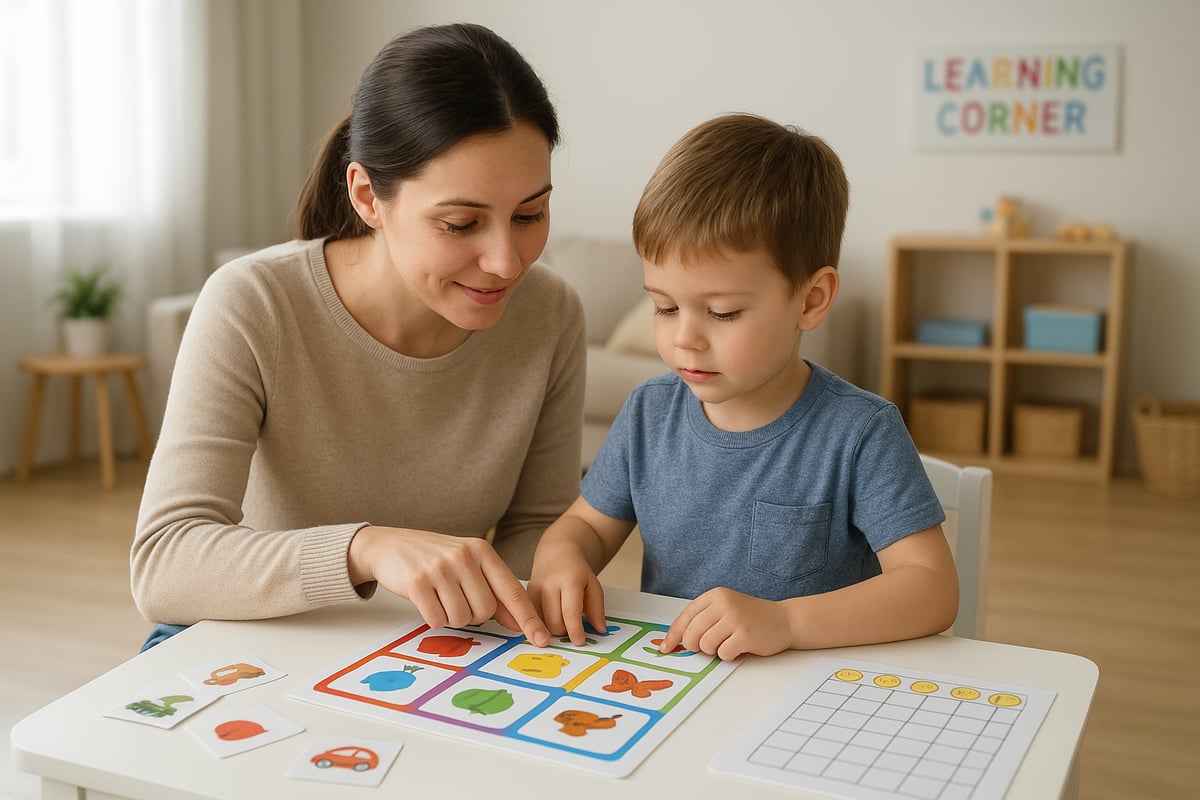
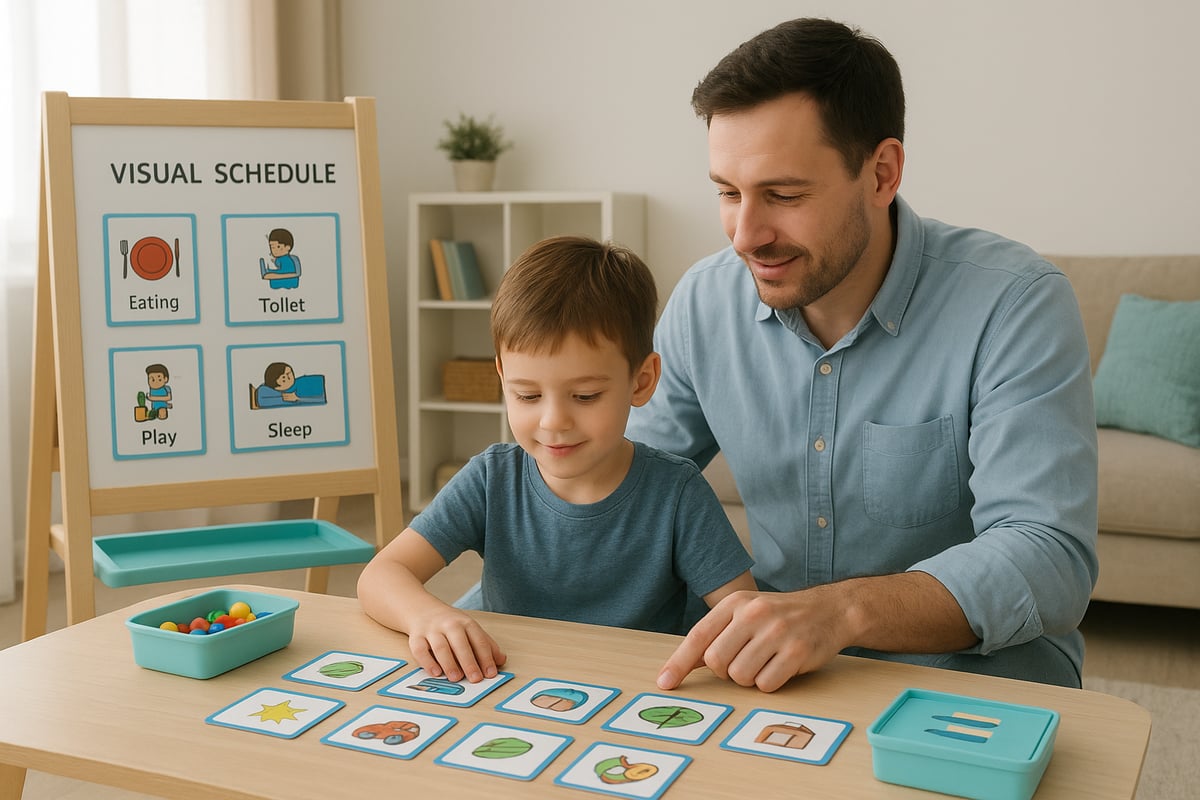
Discrete Trial Training is a structured approach that breaks down complex skills into small, manageable steps. Each step is taught individually, using clear instructions and immediate feedback. This method makes applied behavior analysis at home approachable and effective, especially for teaching early learning concepts.
For example, if you’re teaching your child to identify colors, you might present one color at a time and offer praise or a small reward when they respond correctly. The process repeats until the child masters the skill before moving to the next.
- Break skills into simple parts
- Use repetition and consistency
- Provide immediate feedback and reinforcement
DTT allows you to build a strong foundation, one step at a time, and track progress easily in your home environment.
Natural Environment Teaching (NET)
Natural Environment Teaching brings applied behavior analysis at home into your child’s everyday life. Instead of formal lessons, NET uses daily routines and play to teach important skills. This approach helps children generalize what they learn and encourages spontaneous use of new abilities.
Imagine practicing communication during snack time by prompting your child to request their favorite food. You can also build social skills while playing with siblings or during bath time. For an in-depth look at how to embed learning into your routines, check out this guide to natural environment teaching in ABA.
- Use real-life situations for teaching
- Reinforce skills in different settings
- Encourage your child’s interests and choices
NET empowers families to make every moment a learning opportunity, making ABA both fun and practical.
Task Analysis and Chaining
Task analysis is about breaking down a complex activity into smaller, sequential steps. Chaining is the process of teaching each step, either starting from the beginning (forward chaining) or the end (backward chaining). These techniques are essential for applied behavior analysis at home, especially when building independence.
Take handwashing as an example. Start by teaching your child to turn on the tap, then gradually add the steps of wetting hands, applying soap, scrubbing, rinsing, and drying. Celebrate each small success as your child gains confidence.
- List out each step of a task
- Teach steps in order or in reverse
- Reinforce progress at every stage
With task analysis and chaining, even the most challenging routines become achievable.
Prompting and Fading
Prompting helps guide your child to the right response, while fading ensures they learn to do it independently. Types of prompts include verbal instructions, physical assistance, visual cues, and gestures. Applied behavior analysis at home relies on using the right prompt at the right time, then gradually reducing support.
For instance, you might start with hand-over-hand help for a puzzle, then shift to pointing or verbal cues. Over time, you fade the prompts until your child completes the activity alone.
- Choose the least intrusive prompt needed
- Fade prompts slowly to build independence
- Celebrate each step toward autonomy
Prompting and fading build confidence and reduce frustration, empowering your child to master new skills.
Visual Supports and Social Stories
Visual supports are powerful tools in applied behavior analysis at home. They include schedules, choice boards, and social stories—simple, illustrated narratives that explain routines or social situations. These supports help children understand expectations, transitions, and emotions.
For example, a morning routine chart with pictures can guide your child through getting dressed, brushing teeth, and eating breakfast. A social story about visiting the dentist can prepare them for new experiences.
- Use pictures and symbols for clarity
- Create step-by-step charts or boards
- Write simple stories for new situations
Visual supports and social stories make the world more predictable, easing anxiety and building essential life skills.
Tracking Progress and Troubleshooting Challenges
Tracking progress is the backbone of applied behavior analysis at home. When you consistently monitor your child’s learning, you gain valuable insights into what’s working and where extra support is needed. Progress tracking not only guides your next steps, but also celebrates every milestone, big or small. Did you know that 60% of families report increased skill retention with regular monitoring, according to Autism Speaks (2023)? This highlights how essential it is to make tracking a daily habit.
Choosing the Right Tools for Monitoring
There are many ways to keep track of your child’s journey with applied behavior analysis at home. Some families prefer paper logs or printed checklists, while others use apps or simple spreadsheets. The key is to pick a system that feels manageable and consistent for your routine.
| Tool | Pros | Cons |
|---|---|---|
| Paper Logs | Easy to start, low tech | Can get lost or disorganized |
| Apps | Automated, charts and reminders | May require setup |
| Spreadsheets | Customizable, easy to share | Needs basic tech skills |
For practical ideas on how to reinforce and track ABA skills in daily life, you may find Easy ways to reinforce ABA skills especially helpful. Choose what fits your family, and remember, the most important part is consistency.
Spotting Patterns and Troubleshooting Setbacks
As you track progress with applied behavior analysis at home, patterns and triggers often become clearer. Maybe meltdowns happen more often before lunch, or communication improves when routines are steady. Use your data to identify these patterns and adjust strategies as needed.
If you notice a plateau or your child starts to regress, don’t panic. Setbacks are a normal part of any learning journey. Try adjusting reinforcement schedules, changing up rewards, or revisiting earlier skills. Evidence shows that parent-led ABA programs can have a lasting impact on outcomes, even when challenges arise. For more on this, see Parent-Led ABA Impact on Clinical Outcomes.
Working with Professionals and Staying Flexible
Applied behavior analysis at home is a team effort. Regularly review your data with therapists or BCBAs if you have access, but remember, you are your child’s expert. When you hit a roadblock, reach out for professional input or connect with other parents for support.
Be patient and flexible. Progress is rarely a straight line, and every child’s path is unique. Celebrate the small wins, adjust your strategies as needed, and trust the process. With steady tracking and compassionate troubleshooting, you’re building lifelong skills and resilience for your child.
Resources, Support Networks, and Continuing Education
Finding the right resources and support can make all the difference as you navigate applied behavior analysis at home. You are not alone on this journey—many families, professionals, and organizations are ready to help you succeed.
To get started, explore trusted online resources. Websites like Autism Speaks, the Association for Science in Autism Treatment, and the CDC offer comprehensive guides, research updates, and practical tips for families using applied behavior analysis at home. For strategies tailored to your daily routine, check out In-home autism support solutions, which provides actionable advice for home-based interventions.
Building a strong support network is equally important. Connecting with other parents through local meetups or virtual support groups can provide encouragement and fresh ideas. In fact, 75% of parents report lower stress levels when they are involved in support networks. Consider joining an online group where you can share experiences, ask questions, and celebrate progress together.
Ongoing education empowers you to confidently use applied behavior analysis at home. Look for webinars, online courses, or workshops led by experienced professionals. Many organizations offer free or low-cost training, so you can keep building your skills. Books and toolkits designed for parents are also helpful for learning new techniques and troubleshooting challenges as they arise.
Sometimes, professional guidance is needed. If you feel stuck or want to enhance your approach, reaching out to a Board Certified Behavior Analyst (BCBA) or consulting with your child’s therapy team can provide personalized support and fresh perspectives. Research highlights the value of Caregiver Involvement in ABA Research, underscoring how active parent participation improves outcomes with applied behavior analysis at home.
Remember, progress is a journey, not a race. Surround yourself with resources, support, and education to build confidence and resilience as you help your child thrive with applied behavior analysis at home.
I know stepping into the world of ABA at home can feel overwhelming, but you’re not alone—every small step you take truly matters. We’ve explored how understanding your child’s unique needs, setting up supportive routines, and using play-based strategies can lead to real progress and brighter days ahead. If you’re ready for more support, or want guidance from compassionate professionals who understand the journey you’re on, let’s take that next step together. You can Enroll with Ujala Life and discover a personalized, caring approach that puts your child and family at the heart of everything we do.